The Impact of the U.S.–Iran–Israel War on Global Trade, Oil Markets, and Shipping Rates
06 Mar 2026
The escalating conflict involving the United States, Israel, and Iran in early 2026 has created one of the most significant geopolitical shocks to the global economy in recent years. While the military implications are substantial, the economic impact is already becoming visible. The war is disrupting global trade routes, pushing oil prices higher, and significantly increasing shipping and insurance costs, ultimately influencing global trade market research report and market stability.
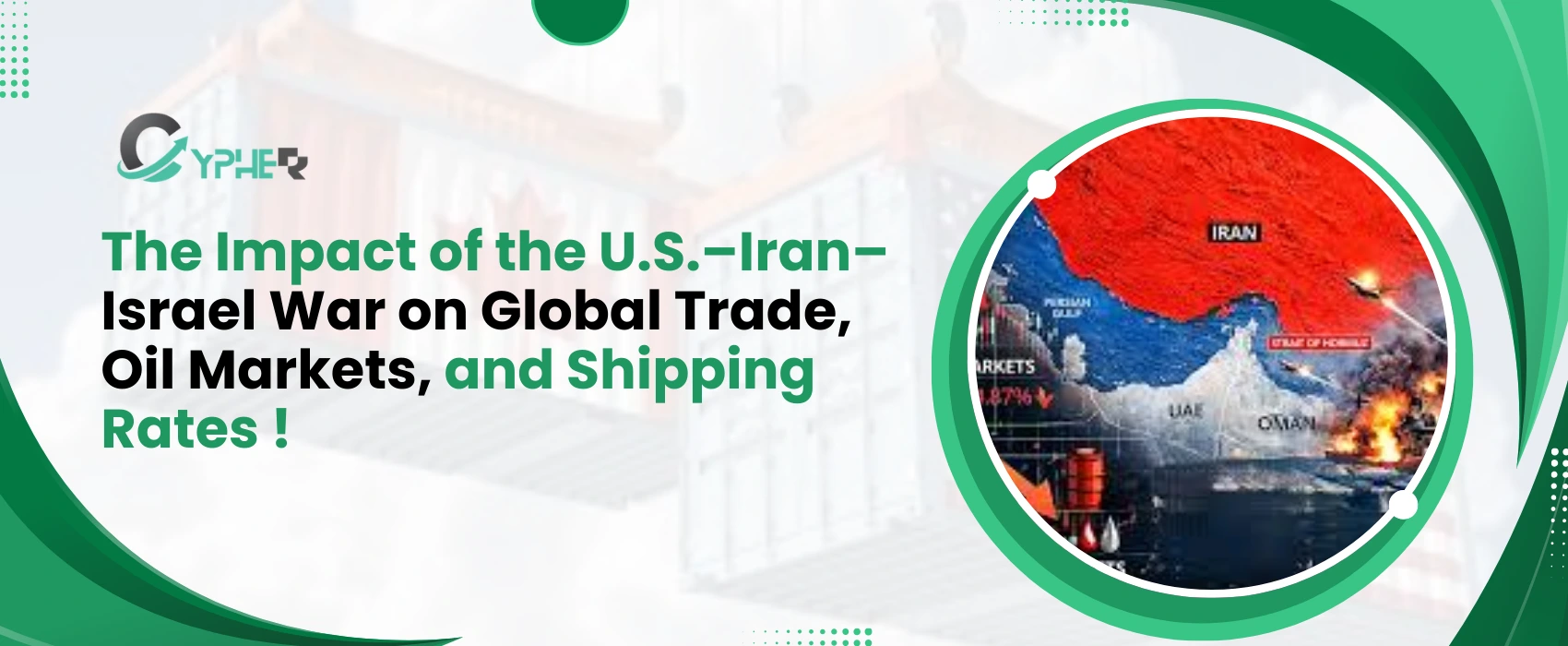
The crisis is largely centered around the Persian Gulf and nearby strategic trade corridors, particularly the Strait of Hormuz and the Red Sea. These maritime chokepoints play a crucial role in global commerce, carrying large volumes of crude oil, liquefied natural gas (LNG), and a wide range of manufactured goods. Even brief disruptions in these routes can send shockwaves through international markets and supply chains.
This article examines how the U.S.–Iran–Israel conflict is impacting three key pillars of the global economy: energy markets, international shipping, and global supply chains. Drawing on current trends and expert insights, it highlights why the economic consequences of the conflict could continue to affect global trade long after the military tensions subside.
Pre-War Iran Trade with the U.S. and Israel: Low Commercial Ties, High Geopolitical Risk
To understand the economic implications of the current U.S.–Iran–Israel conflict, it is important to examine the trade relationships between these countries before the war. In reality, direct economic ties between Iran and the United States were already extremely limited due to decades of political tensions, sanctions, and diplomatic hostility. However, even with restricted relations, small trade flows and indirect economic connections still existed and played a role in the broader global economic system.
Despite years of sanctions and political confrontation, the United States and Iran maintained minimal but measurable trade, mainly involving humanitarian goods, agricultural products, and limited services. According to official U.S. trade market research report, total U.S.–Iran trade in goods and services reached around $838.4 million in 2025, while goods trade alone accounted for approximately $59 million. The United States exported goods worth about $58.5 million to Iran, whereas imports from Iran were only around $1.4 million, creating a U.S. goods trade surplus of roughly $57 million. Most U.S. exports consisted of items permitted under sanctions exemptions, including agricultural commodities, medical equipment, pharmaceuticals, and humanitarian supplies.
Iranian exports to the United States were extremely limited and largely included small quantities of carpets, artworks and handicrafts, spices, and specialty food products. In the broader context of global trade, this economic relationship was relatively insignificant. Iran ranked 173rd among U.S. export destinations and 206th among U.S. import sources, reflecting how sanctions had already separated the two economies.
However, the strategic importance of this relationship was never based on the volume of direct trade. Instead, it was tied to energy markets and geopolitical influence. The United States holds a powerful position in global financial systems, shipping insurance, and international sanctions enforcement. Because of this influence, U.S. sanctions have a major impact on Iran’s ability to trade with other countries. For instance, Iran exports around $35 billion worth of oil annually, primarily to Asian markets such as China. Many of these shipments rely on complex sanction-evasion strategies, including ship-to-ship transfers and disguised tanker movements. As a result, although direct U.S.–Iran trade remained small, American economic policies continued to have a significant indirect influence on Iran’s overall participation in global trade.
U.S.–Iran Trade Trends in the Past Five Years:
Historical market research report
Over the past five years, trade between the United States and Iran has remained very small but has shown noticeable fluctuations due to sanctions, political tensions, and limited permitted trade activities. In 2021, total U.S.–Iran trade stood at about $40.61 million, reflecting the highly restricted commercial relationship between the two countries. Trade activity increased in 2022, reaching $56.71 million, and continued to rise slightly in 2023, when total bilateral trade reached $61.27 million. The biggest increase occurred in 2024, when trade surged to around $97.13 million, largely due to higher U.S. exports of humanitarian goods allowed under sanctions exemptions. However, in 2025, the total value of trade declined again to approximately $59.99 million. Overall, these figures show that although direct trade between the United States and Iran still exists, it remains extremely limited and mostly consists of sanctioned-permitted goods such as agricultural products, medical supplies, and humanitarian items.
Trade between Iran and Israel has historically been extremely limited and is essentially nonexistent today. Since the 1979 Iranian Revolution, the two countries have had no formal diplomatic or economic relations. Iran does not recognize Israel as a state, and both governments maintain strict restrictions that prohibit any direct commercial exchanges between businesses in the two countries. As a result, direct bilateral trade between Iran and Israel is effectively zero, making their economic relationship one of the most restricted in the world. The broader geopolitical tensions in the Middle East and the involvement of the United States in the regional conflict have further complicated any possibility of trade between the two nations.
However, the situation was not always this way. During the 1950s to the late 1970s, when Iran was ruled by the monarchy, Iran and Israel maintained relatively cooperative economic and security relations. Iran officially recognized Israel in 1950, and the two countries worked together in several sectors, including energy, agriculture, and infrastructure development. This relationship changed dramatically after the Islamic Revolution in 1979, when the new Iranian government cut all diplomatic and economic ties with Israel. Since then, any limited economic interaction has occurred indirectly through third-party countries. For example, Iranian products may reach Israeli markets through intermediaries in Europe or Asia, while Israeli technologies or goods might enter Iran through regional trade networks. However, these indirect exchanges are extremely difficult to track and are generally considered marginal in global trade market research report.
To better understand the economic significance of the current conflict, it is important to examine Iran’s real trading partners before the war. Iran’s trade relationships are heavily concentrated with a small group of countries, particularly in Asia and nearby regions. China is Iran’s largest trading partner and the primary buyer of its oil exports. Turkey also serves as a major regional trade partner, while India has historically been an important importer of Iranian goods and an exporter of agricultural products to Iran. Some European countries, including Germany and other EU members, maintain limited but strategic trade with Iran in sectors such as machinery, industrial equipment, and chemicals. For instance, China alone imported approximately $22 billion worth of Iranian goods in 2022, much of which consisted of crude oil. Overall, Iran’s total trade reached around $153 billion in 2023, including roughly $86.8 billion in exports. These figures highlight that Iran’s economy relies far more on Asian and regional markets than on Western economies.
Despite Iran having minimal direct trade with the United States and Israel, the ongoing conflict between these countries still has a major impact on global trade. The primary reason lies in geography and energy infrastructure. Iran is located at the entrance of the Strait of Hormuz, one of the most strategically important maritime corridors in the world. Approximately 20% of global oil supplies pass through this narrow waterway each day. Even without significant bilateral trade with the United States or Israel, a military conflict involving Iran can disrupt Gulf oil exports, tanker shipping routes, maritime insurance markets, and global fuel supply chains. Therefore, the economic consequences of the war are driven less by direct trade volumes and more by the strategic importance of energy routes and shipping infrastructure.
Early economic indicators already suggest that geopolitical tensions are affecting Iran’s trade performance. During a previous escalation with Israel, Iran’s non-oil exports dropped by about 34% in a single month, demonstrating how quickly conflict can disrupt international trade flows. Imports also declined sharply as shipping routes became riskier and insurance costs increased for vessels operating in the region. Similar patterns are now beginning to appear again as the current conflict expands and involves larger global powers, raising concerns about broader disruptions to international trade and energy markets.
The Role of the Strait of Hormuz in Global Trade and Energy
Markets
At the center of the current geopolitical crisis is the Strait of Hormuz, one of the most critical maritime chokepoints in the global trade network. Nearly 20% of the world’s oil and natural gas supplies move through this narrow waterway located between Iran and the Arabian Peninsula, making it vital for global energy transportation and international commerce.
After joint U.S.–Israeli strikes on Iran in late February 2026, tensions in the region escalated rapidly. In response, Iran threatened and targeted shipping activities in the area, leading to a significant disruption in maritime traffic. As a result, tanker movements through the strait dropped by nearly 70%, while more than 150 vessels were forced to wait outside the corridor due to rising security concerns. Many major shipping companies also temporarily suspended their operations in the region to avoid potential risks.
The disruption of this single maritime route has immediate global consequences because several major oil-exporting countries—including Saudi Arabia, Kuwait, Iraq, and the United Arab Emirates—rely heavily on the Strait of Hormuz for the majority of their seaborne energy exports. Historically, any instability in this corridor has led to sharp increases in oil prices and higher shipping insurance premiums, and the ongoing 2026 conflict is already beginning to follow the same pattern.
Which Countries Are Most Affected by the U.S.–Iran–Israel Conflict?
Although the military confrontation is primarily centered in the Middle East, its economic effects extend across the global economy. International trade, energy supply chains, and shipping routes are highly interconnected, meaning that disruptions in one strategic region can quickly impact multiple countries. As a result, several major economies are particularly vulnerable to the economic fallout caused by the ongoing conflict.
India is among the countries most exposed to rising oil prices and disruptions in maritime trade. The country imports more than 85% of its crude oil needs and consumes roughly 5 million barrels of oil per day, making it the third-largest oil consumer in the world. A significant portion of India’s oil supply comes from Middle Eastern producers such as Iraq, Saudi Arabia, and the United Arab Emirates. Although India stopped importing Iranian oil after U.S. sanctions tightened in 2019, the broader region remains critical for its energy security. If global oil prices rise above $100 per barrel, India could face several economic challenges, including higher inflation, increased fuel and transportation costs, a widening trade deficit, and pressure on the Indian rupee. In addition, shipping disruptions in the Red Sea and Persian Gulf could increase freight costs for Indian exporters, particularly in industries such as textiles, pharmaceuticals, and chemicals.
China is another country heavily exposed to the economic consequences of the conflict. As the world’s largest importer of crude oil, China relies significantly on energy supplies from the Middle East and maintains important trade ties with Iran. Before the recent escalation, China was importing approximately 1.2 to 1.5 million barrels of Iranian oil per day, often through indirect channels due to international sanctions. Iranian crude also formed a considerable portion of China’s discounted oil purchases. Any disruption to these supply routes could lead to higher energy costs for Chinese industries, increased manufacturing expenses, and rising shipping costs for exports. Because China is the world’s largest exporter of manufactured goods, these increased costs could ultimately influence global consumer prices and supply chains.
The European Union also faces significant economic exposure due to its reliance on international shipping routes that pass through the Middle East. Although Europe has reduced its dependence on Middle Eastern oil in recent years, the region still relies heavily on maritime trade routes that pass through the Red Sea, the Suez Canal, and the Mediterranean shipping corridor. Around 40% of trade between Asia and Europe moves through the Suez Canal, making it a vital link for global commerce. If vessels are forced to avoid the Red Sea and instead take longer routes around Africa, European importers may experience longer delivery times, higher freight costs, and supply chain delays. Industries such as automotive manufacturing, electronics, and retail are especially vulnerable to these disruptions because they depend on timely global logistics networks.
Similarly, Japan and South Korea are highly dependent on Middle Eastern energy supplies. Japan imports nearly 90% of its oil from the Middle East, while South Korea receives roughly 70% of its crude oil from Gulf producers. Because a large share of these energy shipments travels through the Strait of Hormuz, any disruption in tanker traffic through this corridor could threaten their energy security. Rising oil prices would also increase electricity generation costs, which could place additional pressure on industrial production and economic competitiveness in both countries.
Meanwhile, Gulf economies such as Saudi Arabia, Kuwait, the United Arab Emirates, and Qatar face a different set of risks. In the short term, higher global oil prices may increase their export revenues. However, prolonged instability in the region could threaten their export infrastructure and shipping routes. If the Strait of Hormuz becomes unsafe for commercial vessels, even these major oil-producing nations could experience serious disruptions in their ability to export energy to global markets. This highlights how the conflict has the potential to reshape not only regional stability but also the broader dynamics of global trade and energy supply.
Oil Prices Climb Rapidly Amid Global Tensions
One of the most immediate economic consequences of the ongoing conflict has been a sharp rise in global oil prices. Within just a few days of the escalation, Brent crude oil prices increased by around 10–13%, reaching nearly $82 per barrel, marking the highest level recorded in more than a year. Market analysts warn that if the conflict continues or if shipping disruptions persist in the region, oil prices could potentially exceed $100 per barrel, placing additional pressure on global economies that rely heavily on imported energy.
Several factors are contributing to this rapid surge in oil prices. A major reason is the risk to energy supply, as oil exports from the Middle East have slowed due to security concerns in the Persian Gulf. Tankers are facing increasing difficulty passing safely through key maritime routes, while attacks on vessels and energy infrastructure have further tightened the availability of supplies in international markets. In addition, production disruptions have intensified the situation. Iran’s retaliatory strikes have reportedly targeted energy infrastructure across the region, and even limited damage can force producers to temporarily halt operations for safety and security checks.
Another key factor driving the increase in prices is market uncertainty and fear. Energy markets tend to react strongly to geopolitical tensions, with traders often pricing in worst-case scenarios such as a prolonged disruption of the Strait of Hormuz or potential attacks on major oil fields in the region. This heightened uncertainty has increased volatility across the entire energy market, affecting not only crude oil prices but also the costs of refined fuels such as diesel and jet fuel, which ultimately impacts transportation and global trade.
Rising Diesel and Fuel Costs Impact Global Markets
The impact of the conflict is already becoming visible in global fuel markets, particularly in the diesel sector, which plays a critical role in transportation, agriculture, and manufacturing. Rising geopolitical tensions in the Middle East have begun to influence fuel prices, and the effects of the Israel–Iran conflict are also being reflected in the United States diesel market. As supply concerns increase and global energy markets react to the uncertainty, diesel prices have started to climb significantly.
In the United States, diesel prices have risen to around $4.04 per gallon, marking the highest level recorded in nearly two years. Market forecasts from futures trading suggest that prices could increase even further, potentially reaching between $4.25 and $4.45 per gallon, depending on how the conflict develops and whether disruptions in the Middle East intensify. The diesel market is particularly sensitive to these geopolitical tensions because crude oil produced in the Gulf region yields a large share of distillate fuels, including diesel and jet fuel.
The Middle East also plays an important role in global fuel supply chains. The region accounts for approximately 10% of the world’s seaborne diesel supply and nearly 20% of global jet fuel shipments. Any disruption in these supply flows can quickly push transportation and logistics costs higher around the world. As shipping and fuel expenses rise, the increased costs are eventually passed on to businesses and consumers, leading to higher prices for goods and services across global markets.
War Forces Changes in International Shipping Routes
Another significant economic impact of the conflict is the disruption of major global shipping routes. Following Iranian warnings to merchant vessels and attacks on oil tankers, several leading shipping companies—including Maersk—temporarily suspended operations through the Persian Gulf and nearby sea lanes. As security risks increased, many shipping firms began redirecting cargo vessels away from the Red Sea and surrounding waters to avoid potential attacks.
To maintain trade flows, ships are now taking a much longer alternative route around the Cape of Good Hope. This detour can extend shipping journeys by 10 to 15 days, significantly increasing fuel consumption, operational costs, and crew expenses. Longer transit times also reduce the overall efficiency of global shipping networks, which can lead to congestion at major ports and cause delays in international supply chains.
Shipping Costs and Insurance Premiums Are Rising Sharply
Shipping companies are now facing another major financial challenge in addition to rising fuel and operational costs: war-risk insurance. As tensions escalate in the Middle East, insurers have become increasingly hesitant to provide coverage for vessels operating in the Persian Gulf, where ships face potential threats from missile strikes, drones, and naval mines. Due to the heightened risk, some insurance providers have even withdrawn war-risk coverage entirely for ships traveling through the region. For vessels that are still able to secure insurance, the cost of coverage has increased sharply.
Historically, during periods of conflict in the Middle East, war-risk insurance premiums have risen dramatically—from roughly 0.05% of a ship’s value to 0.5% or even higher. For a large oil tanker valued at around $100 million, such an increase can mean hundreds of thousands of dollars in additional insurance costs for a single voyage. These rising expenses significantly increase the operational costs for shipping companies, and in most cases, the additional burden is passed on to businesses and consumers through higher freight rates and transportation costs.
Global Trade Routes Facing Increasing Pressure
The ongoing conflict is not only impacting energy markets but is also placing significant pressure on global trade routes. A large volume of goods transported between Asia and Europe normally passes through the Red Sea and the Suez Canal, making these waterways critical for international commerce. However, rising security threats in the region have begun to disrupt normal shipping operations, forcing exporters and logistics companies to deal with delays and higher transportation costs.
Many exporters are already reporting shipment delays and increased freight charges along routes that pass through the Red Sea. In addition, stricter insurance requirements and enhanced security measures for vessels traveling through the region are adding further operational expenses. For industries that rely on just-in-time supply chains, such as manufacturing, electronics, and retail, even small delays in shipments can create significant disruptions, affecting production schedules and product availability in global markets.
Global Supply Chains Are Experiencing New Bottlenecks
The ongoing war is putting additional pressure on global supply chains at a time when many industries are still recovering from the disruptions caused during the pandemic. International trade networks had only recently begun stabilizing, but renewed geopolitical tensions are creating fresh challenges for manufacturers, exporters, and logistics companies around the world. Rising fuel prices, shipping delays, and longer trade routes are slowing the movement of goods and increasing operational costs across multiple industries.
Several key sectors are particularly vulnerable to these disruptions. The energy and chemicals industry is among the most exposed because petrochemicals and plastic products depend heavily on oil and natural gas supplies from the Middle East. When energy prices rise, the increased costs quickly spread across manufacturing industries that rely on these materials for production. Similarly, the electronics sector is affected because many electronic components produced in Asia are transported to Europe through the Suez Canal. If shipping routes become longer or more complicated, delivery times increase, which can slow down manufacturing and product distribution.
The automotive industry also faces significant risks because car production depends on complex global supply chains with tightly coordinated delivery schedules. Even minor shipping delays can disrupt the timely arrival of essential components, forcing manufacturers to slow down or temporarily halt assembly lines. In addition, the agriculture and food sector is feeling the effects of rising diesel prices. Higher fuel costs increase expenses for farm machinery, food transportation, and fertilizer production. As these costs continue to climb, analysts warn that prolonged disruptions in supply chains and energy markets could contribute to higher global inflation, affecting both businesses and consumers worldwide.
Financial Markets React to Rising Geopolitical Tensions
The ongoing conflict has also created significant volatility in global financial markets. As tensions escalated, investors reacted quickly to the uncertainty, leading to noticeable fluctuations across several major sectors. European stock markets experienced declines, with the FTSE 100 falling by around 1% as concerns about economic instability and rising energy costs affected investor confidence.
Certain industries were particularly impacted. Airline stocks dropped as flight cancellations increased and fuel prices surged, raising operating costs for carriers. At the same time, investors turned to traditional safe-haven assets, causing gold prices to rise by approximately 2.5%. In contrast, defense and energy companies saw gains in their stock values because markets anticipate higher demand for military equipment and increased profits from rising oil prices. These movements across different sectors highlight the strong connection between geopolitical tensions and the stability of global financial markets.
Airlines and Air Cargo Operations Are Also
Impacted
The ongoing conflict has also disrupted aviation operations across the Middle East. Several Gulf countries have imposed airspace restrictions and temporary closures due to security concerns, forcing airlines to cancel or reroute flights. These disruptions are affecting not only passenger travel but also global air cargo operations, which rely heavily on efficient and predictable flight routes.
Air transport plays a vital role in moving high-value and time-sensitive goods, including electronics, pharmaceuticals, and perishable food products. When key air corridors become restricted or require longer detours, delivery times increase and operational costs rise for logistics companies. As a result, some cargo shipments are being redirected to slower sea transportation routes, which adds additional pressure to already strained global shipping networks and supply chains.
Countries Relying on Energy Imports Face Major Risks
Many countries around the world depend heavily on crude oil imports from the Middle East, making them particularly vulnerable to the economic consequences of the ongoing conflict. When geopolitical tensions disrupt energy supplies or drive oil prices higher, these import-dependent economies often face immediate financial pressure. For example, India imports more than 80% of its crude oil, with a large share coming from Gulf producers. A sustained increase in oil prices can significantly impact India’s economy by increasing inflation, raising fuel and transportation costs, and widening the country’s trade deficit.
Other regions that are similarly exposed include Japan, South Korea, and the European Union, all of which rely heavily on imported energy to support their industries and transportation systems. In addition, many emerging economies across Asia and Africa are also vulnerable because energy imports represent a large share of their national expenditure. For these countries, sudden increases in oil prices can quickly translate into higher transportation expenses, rising food prices, and broader inflationary pressures that affect both businesses and consumers.
Can Global Oil Prices Surge Past $120?
Energy analysts and financial institutions are currently evaluating several possible scenarios to understand how the conflict could influence global oil markets and the broader economy. If the conflict remains limited and major shipping routes continue operating with only minor disruptions, oil prices may stabilize in the $80–$90 per barrel range, while shipping costs remain elevated but still manageable for global trade networks.
However, if tensions escalate and disruptions to shipping routes continue, the situation could become more severe. In such a scenario, oil prices could exceed $100 per barrel, and freight rates across global shipping markets would likely rise sharply due to higher insurance costs, longer shipping routes, and reduced vessel availability.
The most extreme scenario involves a complete shutdown of the Strait of Hormuz, one of the most important energy transit routes in the world. If this critical waterway were fully closed, analysts estimate that oil prices could surge to $120–$150 per barrel, creating major supply shortages and significantly increasing the risk of a global economic slowdown or recession. These projections clearly illustrate how heavily the global economy still depends on secure maritime energy routes for stable energy supplies and international trade.
The War May Cause Another Major Supply Chain Shock
Over the past decade, the global economy has already faced several major supply chain disruptions, including the COVID-19 pandemic, the Russia–Ukraine War, and repeated shipping attacks in the Red Sea. The escalating conflict between the United States, Iran, and Israel now threatens to create another significant disruption to global trade and supply chains. Modern supply networks depend heavily on predictable shipping routes, stable energy prices, and relatively low transportation costs. When any of these factors are suddenly disrupted, businesses around the world must quickly adapt their operations to maintain the flow of goods.
In response to such uncertainty, many companies are already considering strategic adjustments. Businesses may begin diversifying their supplier networks, building larger inventory buffers, or relocating production closer to their primary markets to reduce exposure to global disruptions. However, implementing these changes requires substantial time, planning, and financial investment, meaning the economic impact of the conflict could persist even after the immediate crisis subsides.
If the conflict continues for an extended period, it could also accelerate several long-term economic shifts. Many countries may increase investments in renewable energy and alternative fuel sources to reduce reliance on Middle Eastern oil supplies. Governments and corporations might also prioritize the development of alternative shipping corridors to reduce dependence on vulnerable maritime chokepoints. Rising geopolitical tensions often lead to higher defense spending, which can place additional pressure on public finances. At the same time, sustained increases in energy and transportation costs could contribute to persistent global inflation, since fuel and logistics expenses affect nearly every sector of the economy—from manufacturing and agriculture to retail and consumer goods.
Major Highlights of the US–Iran–Israel Conflict and Its Impact on Global Trade
The 2026 US–Iran–Israel conflict is causing major economic disruptions that are impacting global trade flows, oil markets, and international shipping networks. The crisis is largely centered around the Strait of Hormuz, a crucial maritime chokepoint in the Persian Gulf through which nearly 20% of the world’s oil supply passes every day. Even before the conflict escalated, direct trade between Iran and the United States was extremely limited. In 2025, bilateral trade totaled only about $59.9 million, with the US primarily exporting humanitarian goods such as agricultural products and medical supplies. Similarly, Iran and Israel have virtually no direct trade relations, as diplomatic and economic ties have remained suspended since the 1979 Iranian Revolution.
Iran’s primary trade partners include China, Turkey, India, and several European Union countries. Among them, China has been the largest importer of Iranian goods, purchasing roughly $22 billion worth of products in 2022, mostly crude oil. However, the escalation of the conflict has severely disrupted maritime activity in the region. Tanker traffic through the Strait of Hormuz has reportedly dropped by nearly 70%, leaving more than 150 vessels waiting outside the corridor due to security risks. As a result, global oil markets have reacted quickly, with prices rising by 10–13%, pushing Brent crude close to $82 per barrel. Analysts warn that if the conflict intensifies further, oil prices could surge beyond $100 or even $120 per barrel.
The rise in energy prices is already affecting fuel costs in several countries. In the United States, diesel prices have climbed to around $4.04 per gallon, the highest level seen in nearly two years. Meanwhile, international shipping companies are being forced to reroute cargo vessels around the Cape of Good Hope, which adds 10–15 extra days to delivery schedules and significantly increases fuel and operational costs. At the same time, war-risk insurance premiums for shipping have surged sharply, in some cases rising from 0.05% to over 0.5% of a vessel’s value, leading to higher freight charges worldwide.
Major global economies expected to face the strongest impact include India, China, the European Union, Japan, and South Korea, mainly because of their heavy dependence on Middle Eastern oil imports. The disruption is also affecting supply chains across multiple industries, including energy, electronics, automotive manufacturing, and agriculture, where delays and higher logistics costs are already becoming visible. Experts warn that if the Strait of Hormuz were completely closed, oil prices could potentially rise to $120–$150 per barrel, which could significantly slow down global economic growth and trigger another major supply chain crisis.
Final Analysis and Key Insights
The US-Iran-Israel conflict has already created major
turbulence across global financial markets. What started as a regional military
confrontation is now developing into a broader economic challenge for the world.
Disruptions in the Strait of Hormuz, increasing oil prices, rising shipping insurance
premiums, and the rerouting of major trade routes are significantly impacting global
commerce. Energy markets remain unstable, supply chains are under strain, and companies
worldwide are preparing for higher logistics and transportation expenses.
In today’s interconnected global economy, even a conflict confined to one region can trigger widespread economic effects. As the situation continues to unfold, global attention will stay focused on the Middle East—not only due to security concerns but also because of its importance to global trade and energy supply. If tensions escalate further or shipping disruptions continue, the economic consequences could spread far beyond the region, influencing fuel prices, transportation costs, and the prices consumers pay for everyday goods around the world.
Important Note for Readers
We hope this analysis on the impact of the US–Iran–Israel conflict on global trade, oil prices, and shipping costs has provided valuable insights. If you are seeking deeper intelligence on global energy trade, HS code–level trade market research report, or country-wise import–export statistics, Cypher Exim can help support your market research and strategic planning.
With access to comprehensive global import–export shipment market research report by country or product, port-wise trade movement analysis, pricing trends, and verified buyer–supplier intelligence, you can gain a clearer understanding of how geopolitical developments are influencing international trade and energy markets.
For inquiries, partnerships, or to request a sample market research reportbase, feel free to contact us at sales@cypherexim.com and explore how market research report-driven insights can help strengthen your global trade strategies and business decisions.